
I’ve been approached by Viking Bags in Los Angeles to use and review one of their ADV products, the Viking Apex ADV Touring Bag with Hydration Pack. I think it’s ADV, though the video and copy on the website refers to it as ADX, AC/DC mid-drift not withstanding. It’s clear here that Viking is rightfully entrenched in Bagger/Cruiser culture, with the ADV market as an afterthought.
With a bit of a shipping snafu, I received the tank bag via the USPS. I’ve never used nor purchased a product from Viking Bags, nor do I know anyone in their employ.
After posting my initial impressions of the bag @UTADV, the comments the post received remarked about how Viking’s product was a clone of MoskoMoto’s Nomax Tank Bag and after a bit of investigation it was pretty clear that the Apex is a knock-off product.
At first glance on Viking’s website, the Apex bag appears to be a stout clone of the Nomax, with matching features and build at half the price. Interesting to note that the website depiction of the Apex shows a weatherproof zipper, much like YKK’s Aquaguard product where the zipper teeth are embedded in a channel.

The shipped bag has a different zipper, one that more closely resembles the Nomax bag.

I had a GIVI tank bag that used YKK’s Aquaguard nylon zipper, and while the seal was waterproof, ease of access was sacrificed. The bag was so hard to open and close that I soon swapped it out. The Apex zippers are smooth with little binding around the corners.
The Apex Tank Bag is constructed using 1680D Ballistic Nylon. The D is important in that nomenclature since it indicates that the basket-weave material is coated with urethane giving it a water-repelling finish.

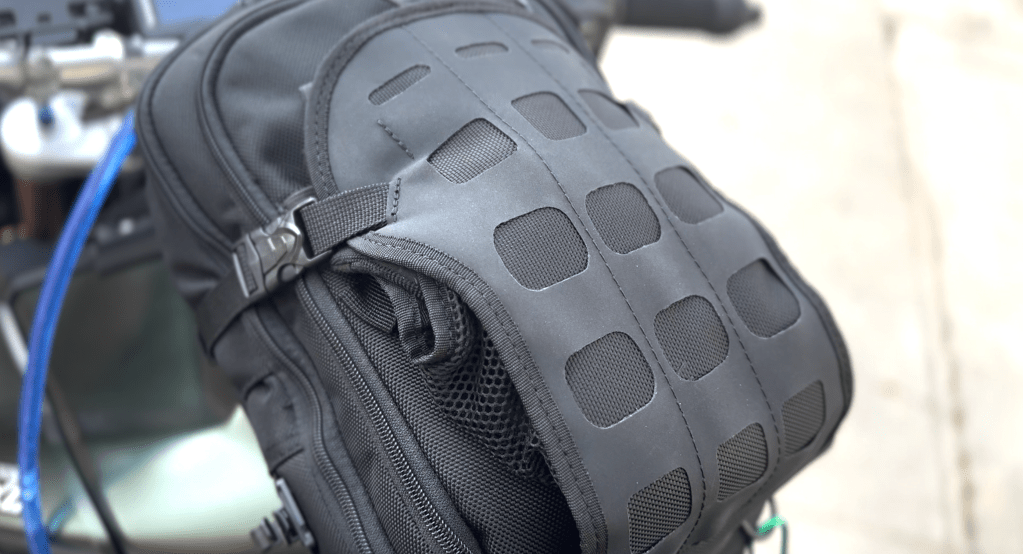
Viking touts the ADV bag’s beavertail MOLLE system, something that also appears to be pioneered by MoskoMoto. In fact, let me just get this out of the way right now – I was impressed by the bag’s design and execution right out of the box, but when I saw the comments on the YouTube post and dug deeper into MoskoMoto’s bag, Viking Bags lost their credibility with me. When I looked closer at their website and found inconsistencies and a bit of misrepresentation, I decided this collaboration was over. I’ll still review the bag’s performance as I travel across the continent since I got a free bag out of this deal.
I’m digressing. Back to the MOLLE panel. I’m not sure what the actual MOLLE material is, but given its single stitch attachment to the ballistic nylon beavertail, I’m wondering which is going to fail first. MOLLE attachment hardware is relentless in its difficulty to apply to the webbing with the idea that the webbing is going to withstand hasty access to gear and devices stowed. Anyone who’s gone through BCT – not to mention deployment – will back me up on this. The Apex panel feels like all show.
Open up the beaver tail and you’ll find the bag’s top, easily accessible compartment. It’s a good place to keep items that are frequently used, like eye drops, nasal spray, a tire pressure gauge, and my Triumph Motorcycles ball cap.

Lots of little pockets to stow lots of little stuff, mimicked from Mosko. Flat items will work better here so the flap doesn’t, um, flap.
The next pocket down gets a bit more serious in storage and access. It has a perimeter zipper allowing it to open à la clamshell. What I like is that it has lots of elastic and pockets to keep things in place.

It’s always a hassle to open a tank bag and have items fall out onto the pavement, so this retention is appreciated. I’m a bit suspicious of the elastic material, though. I’ve seen this weight and weave fail quickly in other cheap bags.
On the lid to this compartment are two zippered pouches, the top roughly six-by-six inches and the bottom six-by-three. I use the bottom pouch to stow my throttle/brake lock.
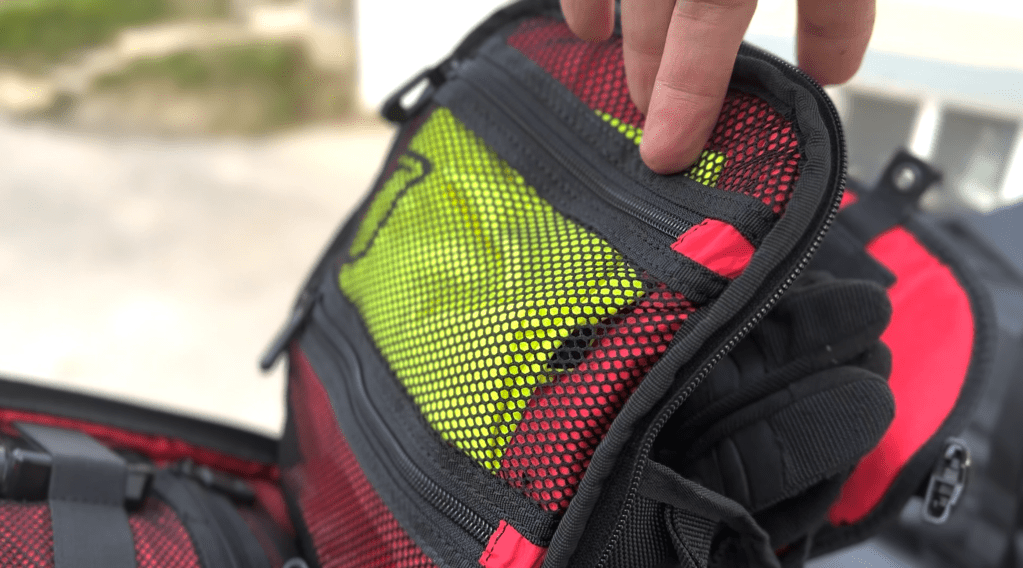
Next compartment down is the largest in the just-over seven liter bag where I stow my heated gloves and some spares.
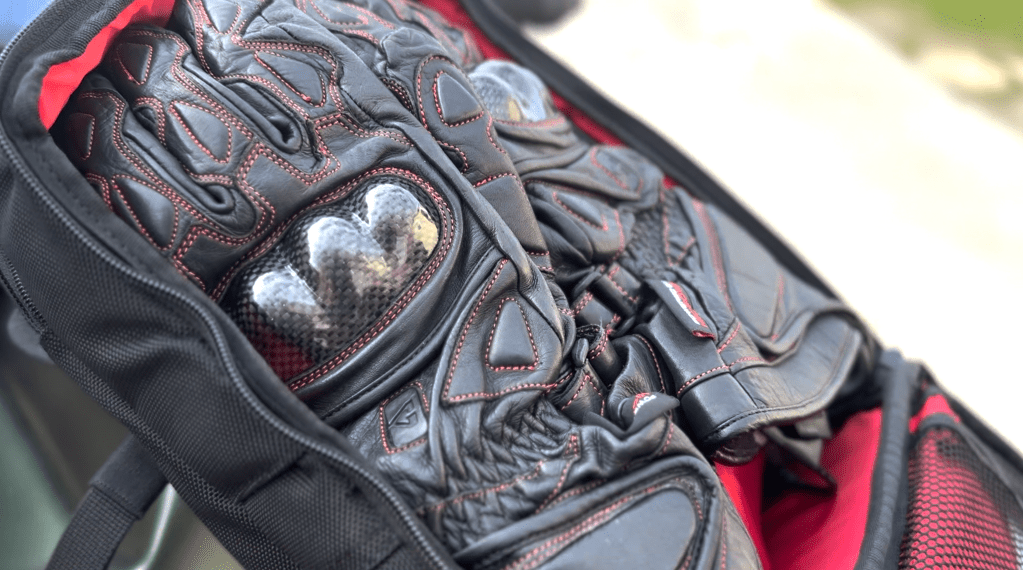
It, too, has a storage pocket stitched to its lid, large enough to hold maps, manuals, carnet de passages, or in my case, lots of Tylenol.
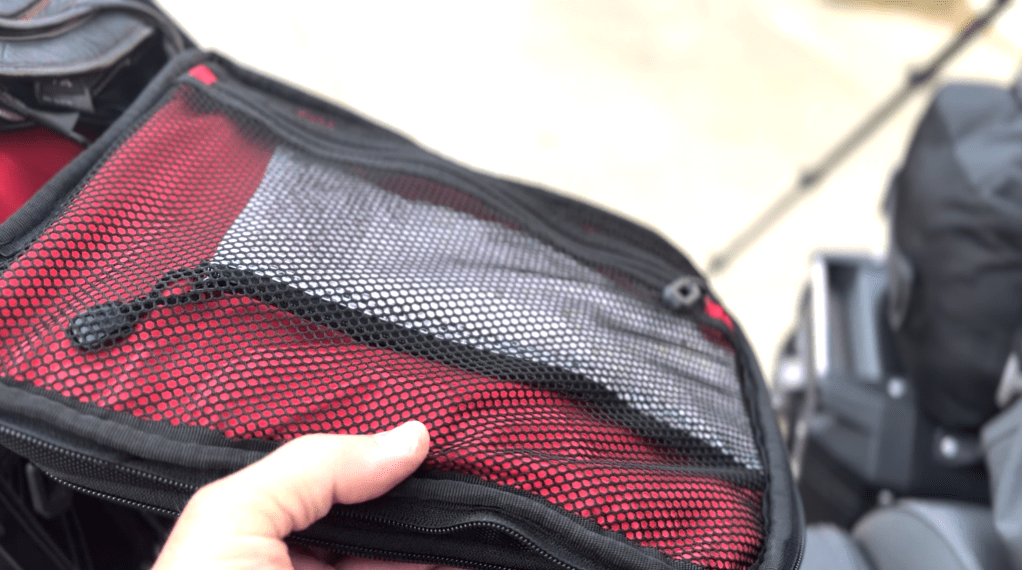
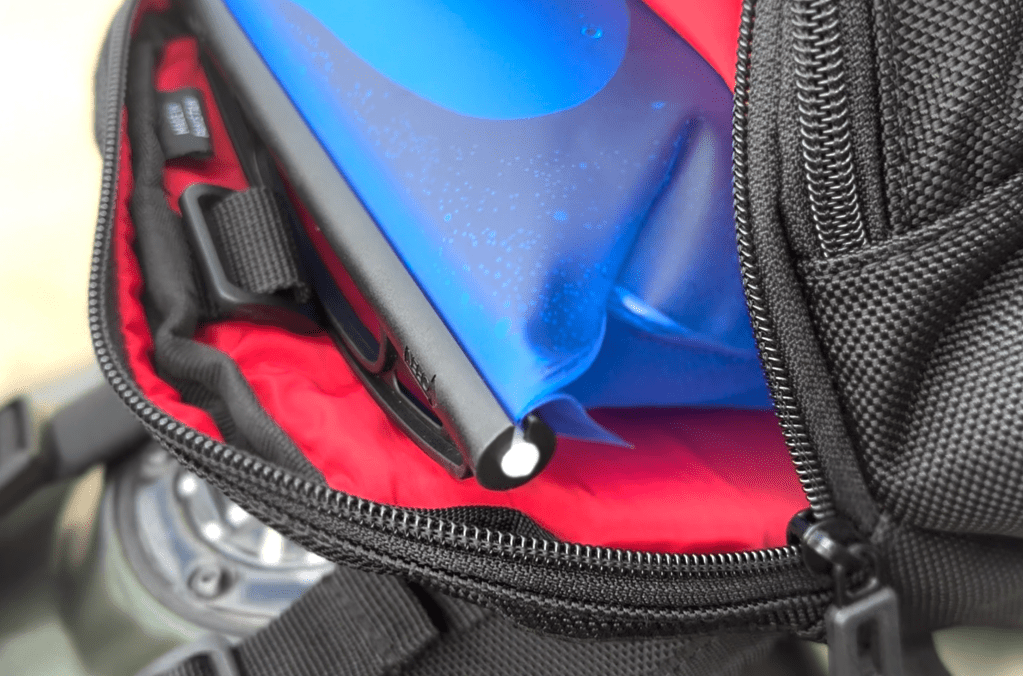
The fourth and last pocket is designed for the hydration pack, what we in the outdoor adventure world call a bladder. The Apex ships with a two liter bladder with a hose and bite valve that has a snap-on cover.

The bladder has a closure different than most hiking bladders that have a tendency to be proprietary to a marque, such as Camelback or MSR. The opening on this is wide and easy to fill, just slide the black bar off its retention rod over which the bladder top is wrapped and open the top to fill.
I’ve been using a Kriega Hydration System for the last five years where I first saw this design approach in filling a water bladder.
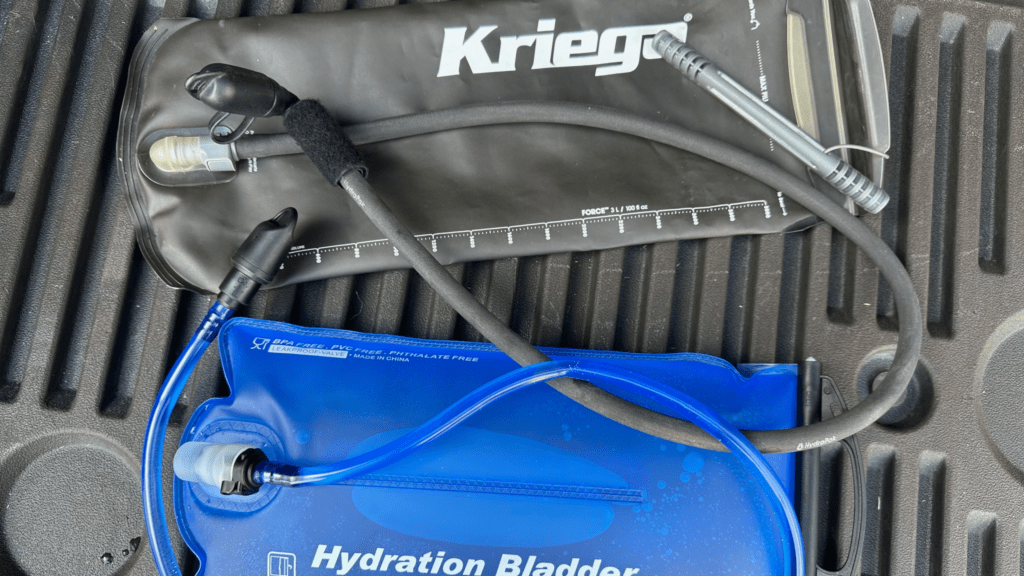
The Kriega design is more stout, secure and easy to open and close, and as you can see in the welds, the Kriega bladder has twice the integrity. While this isn’t an apples to apples comparison, even at $179, Viking Bags shouldn’t be skipping on quality with a device that’s supposed to hold two liters of water. This one didn’t. I stored it full overnight and when I brought the Tiger out the next morning for a ride I found the Apex bladder had leaked and saturated everything in the bag – the leak came from the tube’s O-ring seal that was properly seated. I could get into the ramifications of this, especially on a real ADV ride away from civilization where the rider depended on this bag for their survival, but I’ll leave that to your imagination. It’s my opinion that this cheap hydration bladder is simply an inflated feature to sell the bag.
On my ride I replaced the stock bladder and tube with my Kriega system innards, and then decided to bag the whole tank bag bladder concept, restore my Kriega backpack and use the space in the Apex tank bag for a Goal Zero Sherpa 100 power block that charges off the Tiger’s auxiliary 12V plug. The two-liter stock bladder displaced at least a third of the tank bag’s usable space, so its omission was an easy decision to make.
The Apex’s mounting system allows a quick, easy access to the tank with the release of a couple of buckles. My issue with the mounting system is in its engineering, and to be fair, the Nomax bag mounts the same way. Zip ties are used to secure the bottom mounting buckle to the frame.
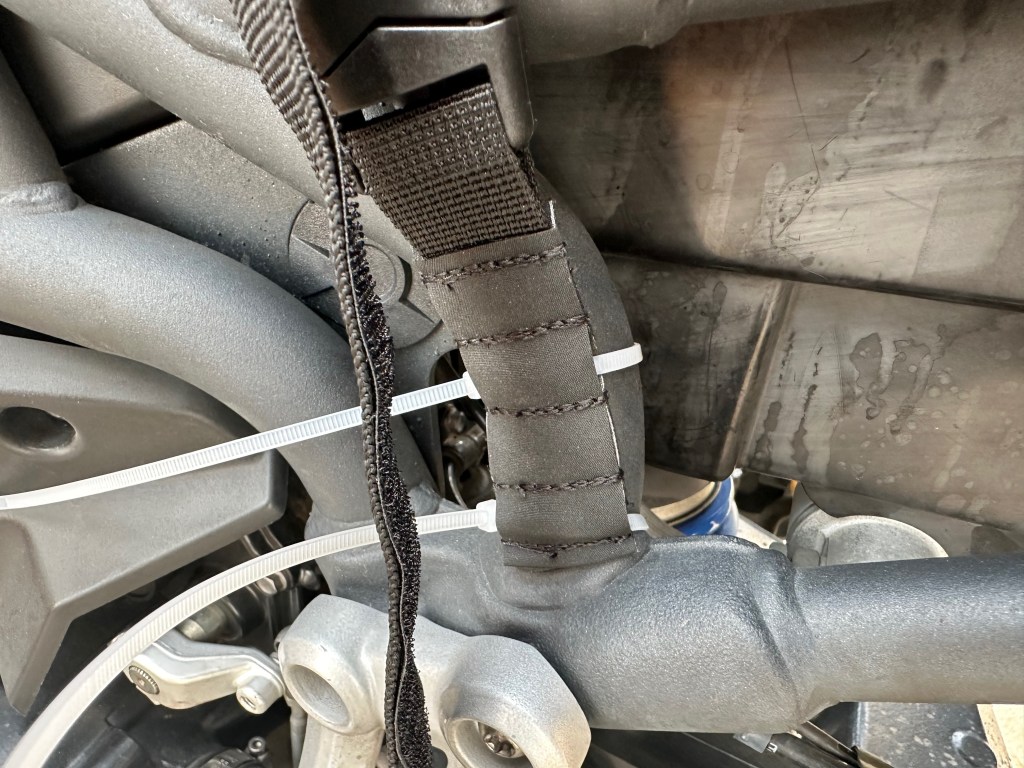
Perhaps this wouldn’t have been such an issue for me had the zip ties that shipped from Viking Bags not been thin, cheap, white zip ties. Margins, right? I’ve since replaced them with UV-resistant thicker black zip ties.
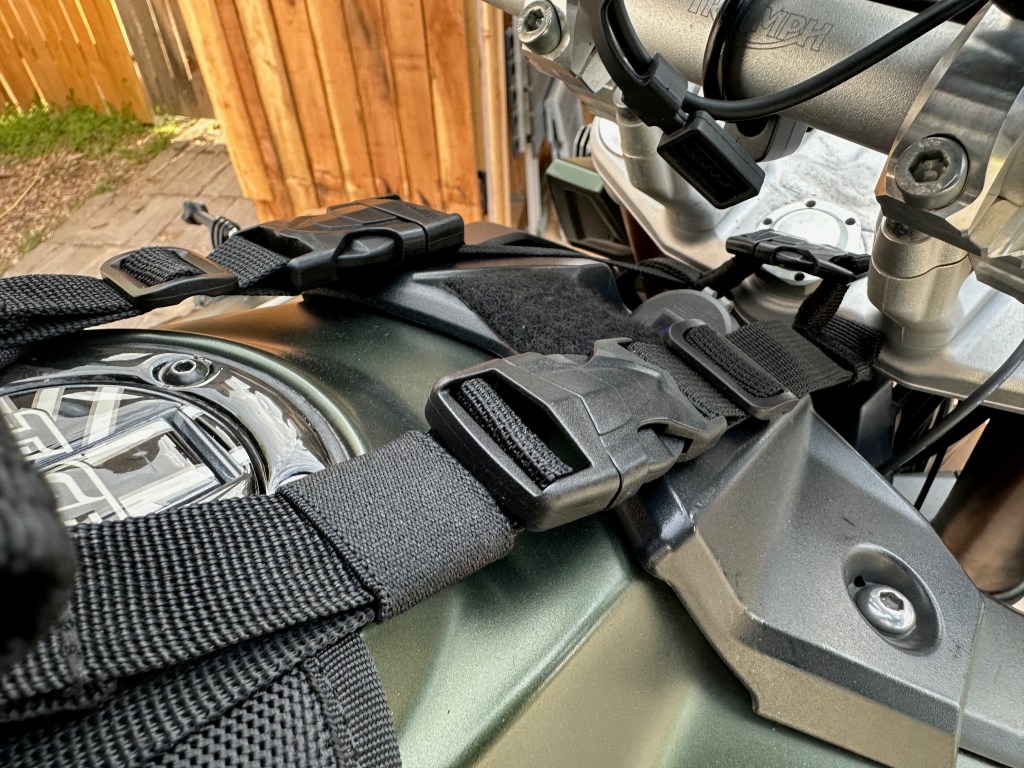
The top of the rear bag straps have a spring-loaded cam lock that allows cinching the bag evenly and snug against the tank after a fill-up. The tank is protected from the hardware by flaps.
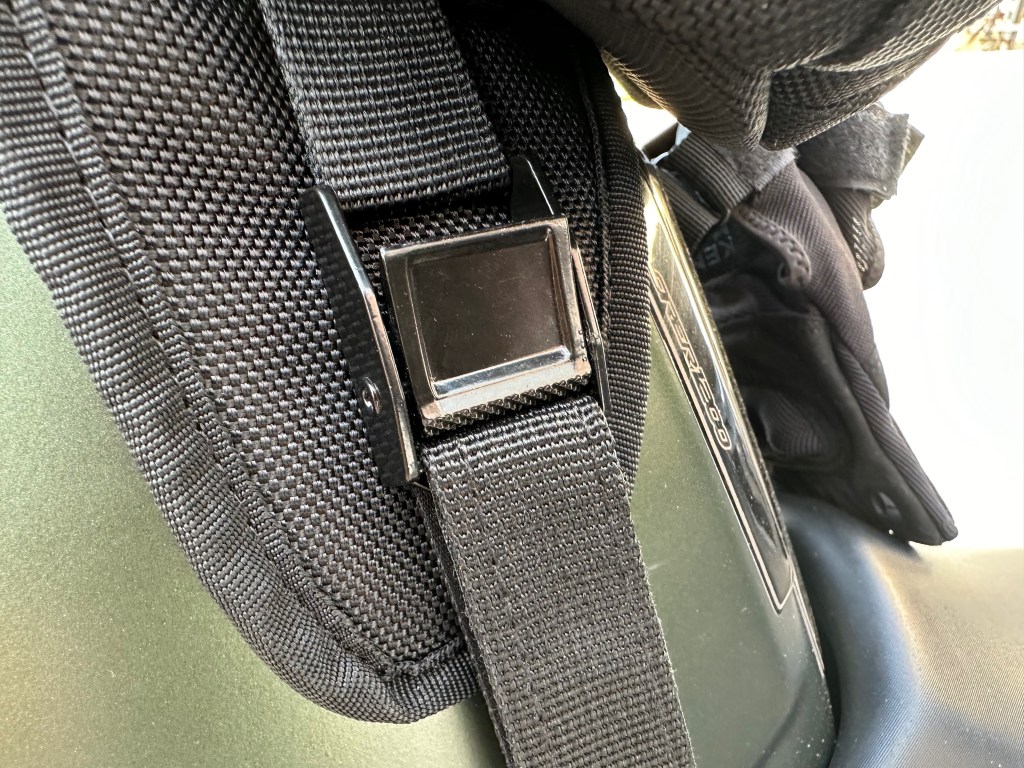
The front of the bag mounts to a small A-shaped harness that wraps around the triple clamp via two quick-release buckles. I like this design since it prevents the harness from slipping down into the bike’s fork area when disconnected.
The Apex bag is lined in red material that makes finding things easier than the black hole of other products. Its zippered bladder hose access doubles as a cable pass-through, and the item ships with a raincoat.

So, all this gets me wondering, does one really get what they pay for? It is okay to buy a knock-off product at half the price of the original (with coupon code)? I’ve been building overland vehicles and ADV motorcycles for almost twenty years now, designing and developing my own gear to make travel a bit easier and more efficient.
I’ve seen the Overland industry explode and watched originators like ARB, FrontRunner, Dometic and others innovate and establish product standards that have since been emulated and knocked-off with lesser quality materials. Have I bought some of this crap? Yep. Was I sorry in the long run? Yep, but not in all cases. Some newcomers to the industry built better mouse traps for less money and passed that value along to the buyers. It’s my opinion that is not the case here.
We’ll see how ballistic this tank bag is over the next 15k miles in the next three months.
 utadvmoto.com